A broken gate, repeat parking violations, suspicious vehicles circling after dark, or a string of package thefts can quickly become a board-level issue. HOA security patrol services give communities a visible, accountable presence that can deter avoidable problems before they affect residents, property values, or the association’s reputation.
For Southern California HOA boards and property managers, the right patrol program is not simply a vehicle driving through the neighborhood. It is a tailored security operation built around the community’s layout, risk areas, resident expectations, and budget. Coverage should be visible enough to discourage misconduct, professional enough to handle resident concerns appropriately, and responsive when an incident requires action.
What HOA Security Patrol Services Should Accomplish
An effective patrol program protects more than gates and common areas. It creates consistent oversight where an HOA may otherwise have limited visibility, especially overnight, during weekends, or at large properties with multiple entrances.
A trained patrol officer can check access points, inspect pool and clubhouse areas, monitor parking lots, look for signs of trespassing or vandalism, and report hazards such as open doors, damaged fencing, or lighting failures. The officer’s presence also discourages people who assume no one is watching.
Patrol services are particularly valuable when a community has recurring issues but does not need a standing guard at one location all day. A mobile patrol can make scheduled checks, perform random inspections, respond to alarms, and complete lock-up duties at a lower cost than continuous on-site coverage. That flexibility is often a better fit for associations working within annual operating budgets.
The goal is not to create an overly restrictive environment for residents. Good security patrol work balances protection with professionalism. Officers should enforce association rules within their assigned role, document issues clearly, and treat residents, guests, vendors, and delivery personnel with respect.
Start With the Community’s Actual Risks
No two communities need the same patrol plan. A gated condominium property near a busy commercial corridor has different vulnerabilities than a large master-planned neighborhood with parks, trails, multiple pools, and private streets.
Before selecting a provider, the board or manager should identify where incidents happen, when they happen, and what response gaps exist. Incident reports, resident complaints, maintenance records, gate logs, and law enforcement calls can reveal useful patterns. A community experiencing late-night vehicle break-ins may benefit from concentrated overnight patrols. A property with repeated pool-area trespassing may need stronger evening checks and lock-up verification.
Common concerns that may justify patrol coverage include unauthorized access, package theft, vehicle burglary, vandalism, illegal dumping, parking violations, homeless encampments near common areas, suspicious activity, and alarm events. Construction or renovation activity within the community can also increase exposure by creating temporary access points and leaving equipment or materials unsecured.
A free security assessment can help an HOA move beyond assumptions. It should examine entrances, perimeter conditions, lighting, camera coverage, amenity areas, parking zones, emergency access, and current procedures. The assessment should result in practical recommendations, not an attempt to push an association into more coverage than it needs.
Patrol Frequency Is a Strategic Decision
The number of patrol visits matters, but timing and consistency matter just as much. A predictable patrol at the same time every evening may be less effective than a program that combines scheduled duties with varied patrol patterns.
For example, a smaller HOA may need a few nightly drive-throughs, gate checks, and a final lock-up inspection. A larger community may need repeated vehicle patrols throughout the evening, bike patrols in high-traffic common areas, and an officer available to respond to incidents across the property.
More coverage is not always the answer. An association should pay for patrol activity that addresses its documented risks. If issues occur primarily on weekends, targeted weekend coverage can be more cost-effective than funding unnecessary daytime patrols throughout the week.
What Officers Should Do During a Patrol
A patrol scope should be clear before service begins. Vague expectations make it difficult for the HOA to measure performance and can create confusion about what security officers are authorized to handle.
Typical duties may include checking pedestrian and vehicle gates, inspecting pool and clubhouse access, patrolling parking areas, identifying suspicious persons or vehicles, checking vacant units when authorized, responding to alarms, and documenting rule violations for management review. Officers can also assist with parking enforcement when the community has established policies and proper authority.
Detailed reporting is essential. Patrol reports create a record of what officers observed, what actions they took, and what conditions need follow-up. If an officer finds a damaged gate latch, an open utility room, or a recurring parking problem, management should receive information that is specific enough to act on.
Security officers are not law enforcement, and a professional provider will not blur that line. Officers should observe, deter, report, de-escalate when appropriate, and contact law enforcement or emergency services when a situation requires it. This disciplined approach protects residents while reducing unnecessary confrontations.
Choosing Between Vehicle, Foot, and Bike Patrols
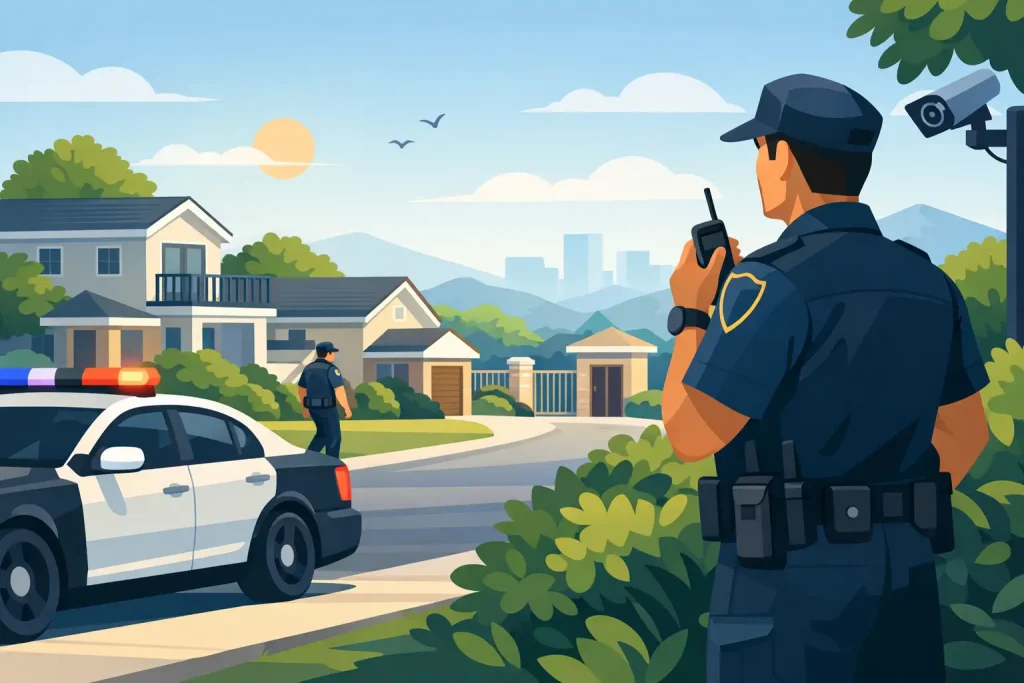
The patrol method should match the property. Vehicle patrols are efficient for large communities, long private roads, multiple entrances, and dispersed amenities. Marked patrol vehicles also provide a strong visible deterrent, particularly at night.
Foot patrols offer closer inspection and are useful around clubhouses, pools, mail areas, parking garages, and dense condominium buildings. An officer on foot may notice unsecured doors, loitering, damaged property, or resident concerns that could be missed from a vehicle.
Bike patrols can be a practical middle ground for communities with trails, parks, or broad common areas where a vehicle is less effective. They are visible, mobile, and able to access locations that may be difficult to reach by car.
Many communities benefit from a combination. A vehicle officer can cover the perimeter and parking areas, then conduct foot checks at amenities and high-risk locations. The right choice depends on the site plan, service hours, known incidents, and budget.
Standards That Protect the HOA
Price matters, but the lowest quote may not provide the operational reliability an HOA needs. A patrol company should be properly licensed, staffed by trained California BSIS-licensed guards, and able to provide coverage 24 hours a day, 7 days a week when the community has an emergency or needs schedule changes.
Ask how officers are screened, trained, supervised, and replaced if they are unavailable. Verify whether the provider conducts drug testing, maintains insurance, and has a clear process for escalating urgent incidents. Boards should also ask what happens when a resident complaint is received or an officer fails to complete a required patrol.
The company should be willing to customize post orders rather than forcing the association into a rigid package. Post orders should define patrol zones, access procedures, incident reporting requirements, emergency contacts, parking procedures, amenity rules, and situations that require immediate notification to management or law enforcement.
This is where dependable supervision matters. A patrol service is only valuable if officers consistently perform the assigned duties and management receives prompt communication. Reliable providers use clear post instructions, supervisory oversight, and documented reporting to maintain accountability.
Build Resident Support Without Sharing Sensitive Details
Residents are more likely to support patrol services when the HOA explains the purpose in practical terms. The message should focus on deterrence, property protection, response readiness, and support for community rules. It should not promise that security can prevent every crime or replace resident awareness.
Associations should share reasonable guidance, such as keeping vehicles locked, reporting suspicious activity promptly, following guest-access rules, and avoiding confrontations. At the same time, the HOA should avoid distributing patrol schedules, officer contact details, or other information that could reduce the effectiveness of the program.
Privacy also deserves attention. Security officers should act professionally, avoid selective enforcement, and document incidents objectively. The patrol program should make residents feel safer, not watched or unfairly targeted.
A Cost-Effective Program Starts With Clear Expectations
The strongest HOA security patrol services are built around measurable expectations: which areas are checked, how often patrols occur, how incidents are reported, and who receives urgent notifications. That clarity helps boards compare proposals fairly and keeps service aligned with the community’s changing needs.
Mursheed Protection Security Services provides customized patrol and guard programs for residential communities across Los Angeles, Orange, Riverside, and San Bernardino counties, with trained officers and coverage structured around site vulnerabilities and budget requirements.
A community does not need to wait for a major incident to improve security. A focused assessment, a realistic patrol plan, and a responsive provider can give the board a practical way to protect the places residents rely on every day.