
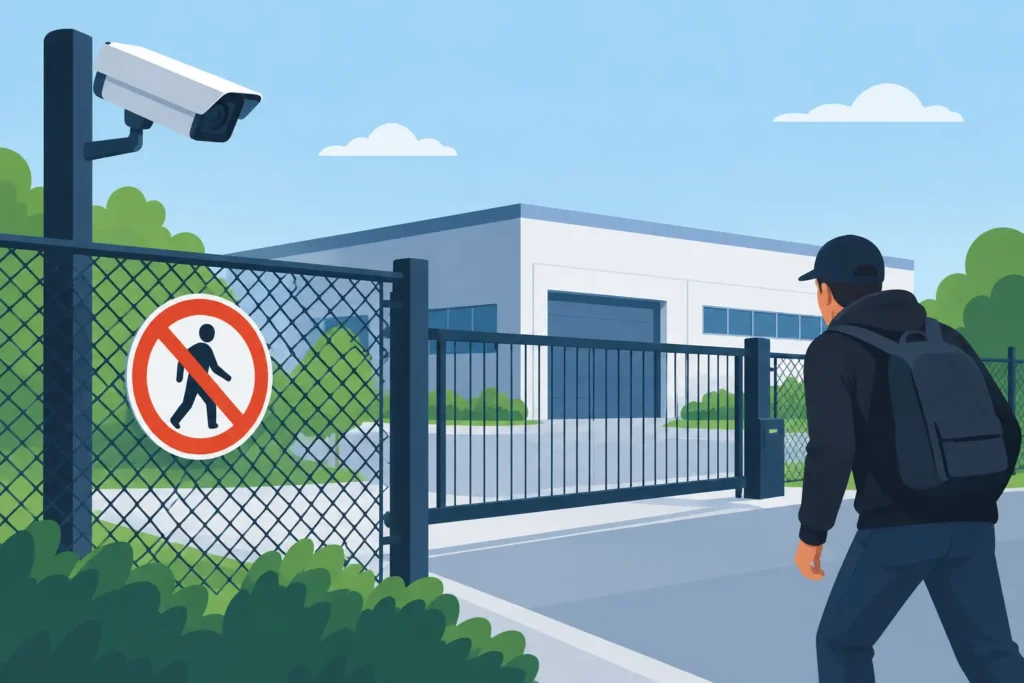
A vacant construction site, an unstaffed loading area, or a dark parking lot can invite more than a casual shortcut. Unauthorized entry creates openings for theft, vandalism, property damage, safety incidents, and liability concerns. Learning how to deter site trespassing starts with making it clear that the property is controlled, monitored, and ready to respond.
The most effective programs do not rely on one fence, one camera, or one warning sign. They combine physical barriers, visible security, consistent procedures, and a response plan matched to the site’s actual risks. For property managers, contractors, facility operators, and community associations, that approach protects the budget as well as the property.
How to Deter Site Trespassing Before It Starts
Trespassers usually look for the easiest opportunity. They notice an open pedestrian gate, a broken section of fence, poor lighting behind a building, or a site that appears unattended after business hours. The goal is to remove those easy opportunities while increasing the perceived chance of being seen and confronted.
Start with a site assessment. Walk the perimeter during the day and after dark. Check every vehicle entrance, pedestrian access point, alley, stairwell, rooftop route, vacant unit, storage yard, and blind corner. Look beyond the main entrance. Many incidents begin at secondary gates, delivery areas, or spaces where employees assume someone else is responsible for security.
Document recurring issues as well. If unauthorized people enter through the same gate, park in the same restricted area, or gather near the same vacant building, the site is showing you where controls need to improve. A targeted solution is generally more cost-effective than paying for broad coverage that does not address the real point of entry.
Control Access Without Slowing Operations
Access control is one of the strongest deterrents because it establishes a clear boundary between public and restricted areas. A property does not need to feel unwelcoming, but visitors, vendors, residents, and employees should understand where they may go and how they are expected to enter.
Keep gates, doors, and perimeter openings secured when they are not actively in use. This sounds basic, yet unsecured access points remain a common cause of preventable incidents. Construction managers should establish who has keys, gate codes, and authority to admit subcontractors. Commercial facilities should review after-hours access permissions when employees leave or change roles.
Visitor procedures matter most at locations with regular deliveries, contractors, or public traffic. A reception officer, gate guard, or designated employee can verify identification, log visitors, issue temporary credentials, and direct people to approved areas. This makes unauthorized access harder while creating accountability if an incident occurs.
For larger properties, access systems can support the process, but equipment alone is not the answer. A card reader does little if a door is propped open, credentials are shared, or an alarm is ignored. Assign responsibility for checking doors and gates at defined times, especially at opening, closing, shift changes, and after vendor activity.
Make the Site Look Actively Protected
Visible security changes behavior. A person considering trespass often moves on when a property appears difficult to enter without being noticed. Clear signs, maintained fencing, functional lighting, marked restricted areas, and a professional security presence all communicate that the site is being watched.
Post signage at every practical entry point. Signs should identify private property, restricted access, surveillance where applicable, and the consequences of unauthorized entry. They are not a substitute for enforcement, but they remove the excuse that someone did not know the area was off limits. Replace faded, damaged, or obstructed signs promptly.
Lighting is equally practical. Illuminate gates, entrances, walkways, parking areas, loading zones, equipment storage, and the edges of buildings. Focus on consistency rather than simply installing the brightest possible fixtures. Excessive glare can create shadows and reduce visibility for cameras or patrol officers. Test the property at night to identify dark pockets created by landscaping, parked vehicles, or burned-out lamps.
Maintain the perimeter. Damaged fences, overflowing dumpsters, overgrown shrubs, graffiti, and abandoned materials can signal that a property is not regularly checked. Repairs should be completed quickly, particularly after a break-in attempt or vandalism. A visible weak point can attract repeat activity.
Use Patrols Where They Create Real Deterrence
Cameras, alarms, and remote monitoring can be valuable parts of a security plan, but they work best when paired with a reliable human response. A trained officer can investigate conditions, enforce site rules, document activity, contact authorized representatives, and request law enforcement support when necessary.
Mobile vehicle patrols are often a cost-effective option for commercial properties, apartment communities, warehouses, and sites that do not require a full-time officer. Patrols can check doors and gates, inspect parking areas, look for suspicious activity, respond to alarms, and perform lock-up services at scheduled or variable times. Varying patrol timing can prevent offenders from learning a predictable pattern.
Standing guards are appropriate when access must be controlled continuously or when the site has high-value equipment, active public traffic, repeated incidents, or sensitive operations. Construction projects may need an officer at a gate during deliveries and overnight patrol coverage after crews leave. Residential communities may benefit from gate, lobby, or parking enforcement coverage during the hours when unauthorized entry is most common.
Foot and bike patrols can be especially useful in spaces where a vehicle cannot easily travel, including large residential properties, event venues, parking structures, and multi-building campuses. The right patrol method depends on the property layout, incident history, operating hours, and budget. A customized plan should cover the risk without forcing the client into unnecessary staffing.
Build a Clear Response Plan for Trespassing Incidents
Deterrence is stronger when everyone knows what happens after an issue is spotted. Staff should not be left to improvise when they find someone inside a restricted area, encounter an aggressive individual, or discover signs of forced entry.
Create a simple escalation process. Employees should know who to call first, what details to provide, and when to avoid direct contact. Security officers should follow site-specific post orders covering access rules, patrol routes, incident reporting, emergency contacts, and circumstances that require law enforcement or medical assistance.
Professional documentation is not paperwork for its own sake. Time-stamped patrol reports, visitor logs, photographs when appropriate, and clear incident narratives help identify patterns. They can also support insurance claims, tenant communication, vendor accountability, and decisions about where to invest in additional protection.
For properties with recurring after-hours issues, consider alarm monitoring and response procedures. An alarm is only useful when a responsible party can assess the situation quickly. Establish current contact lists, confirm who can authorize access, and make sure officers have the information needed to locate utility panels, key boxes, hazardous areas, and emergency shutoffs.
Train Employees and Contractors to Support Security
A security program can be undermined by ordinary habits. Employees may hold a secured door for an unfamiliar person, leave a gate open for a vendor, or assume an unauthorized vehicle belongs to someone else. Brief training helps staff recognize that access control is part of protecting their workplace.
Explain the practical rules: do not share credentials, do not prop open secured doors, report damaged locks immediately, challenge access only when it is safe and within their role, and notify the proper contact about suspicious activity. Contractors should receive the same expectations before work begins, particularly on active construction sites where crews and equipment change frequently.
Keep communication professional and consistent. Trespass situations can involve people who are confused, distressed, intoxicated, or attempting to provoke a confrontation. Highly trained guards are prepared to handle interactions calmly, maintain appropriate boundaries, and escalate through the correct channels rather than creating unnecessary risk.
Review the Program as Conditions Change
A site that was secure six months ago may develop new vulnerabilities after a tenant moves out, a project enters a different construction phase, business hours change, or nearby activity increases. Review incident reports and patrol findings regularly. If an access point is repeatedly unsecured or a particular area draws unauthorized activity, adjust the plan before the problem becomes more expensive.
Mursheed Protection Security Services develops tailored guard and patrol programs for Southern California properties that need visible deterrence, dependable response, and competitive pricing. A free security assessment can help identify whether a site needs mobile patrols, standing guards, access control support, alarm response, or a combination of services.
The best time to address trespassing is before a minor access issue becomes theft, damage, or a safety emergency. Treat every unsecured gate, dark corner, and inconsistent procedure as a chance to make the property less attractive to the wrong visitor and more secure for the people who belong there.