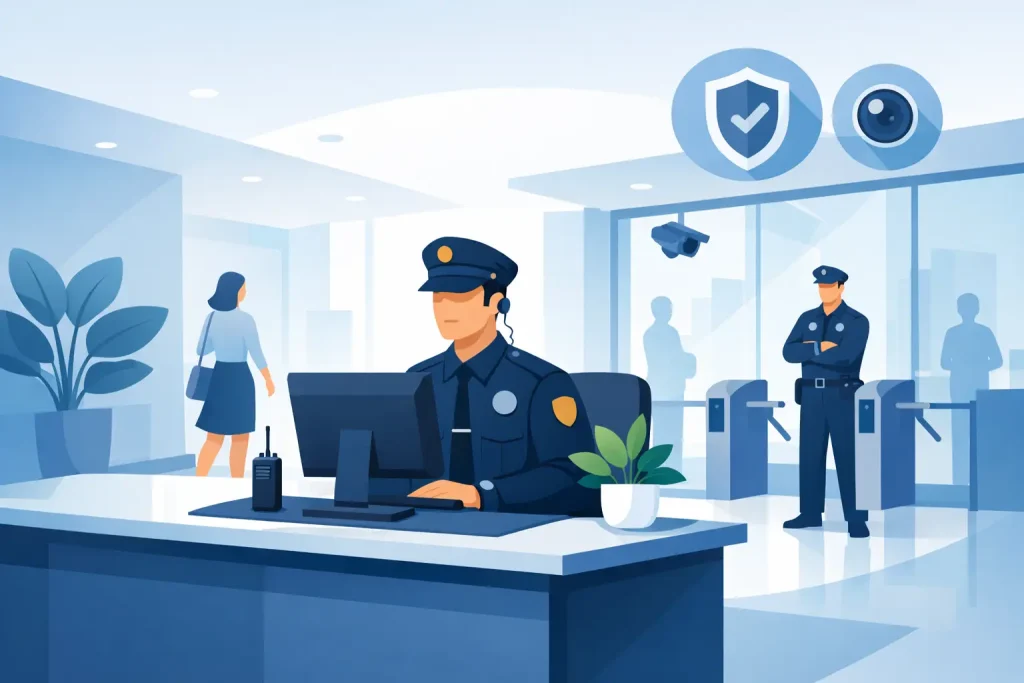
The front desk is where a property makes its first promise: this site is organized, professional, and under control. Reception security guard services turn that promise into a daily operating standard by placing a trained, visible officer at the point where visitors, vendors, employees, residents, and deliveries enter.
For a commercial building, residential community, industrial facility, or active job site, reception coverage is more than someone sitting behind a desk. The right officer helps control access, verifies who belongs on-site, observes unusual activity, supports visitors, and responds quickly when a concern develops. That combination can reduce opportunities for theft, trespassing, conflict, and unauthorized entry without making the property feel unwelcoming.
What Reception Security Guard Services Cover
A reception security officer works at the intersection of customer service and site protection. Their responsibilities should reflect the property’s actual risks, traffic patterns, business hours, and existing procedures. A quiet professional office may need visitor sign-in and after-hours access control. A busy apartment community may need resident and vendor verification, package oversight, parking coordination, and support for leasing staff.
At a commercial or industrial property, the officer may confirm appointments, issue visitor badges, enforce entry procedures, monitor cameras or alarms, maintain a detailed activity log, and direct approved guests to the right location. At a construction site, the role may include tracking deliveries, keeping unauthorized people away from equipment, and reporting gate or perimeter issues before they become costly losses.
The officer also provides a calm point of contact when something is wrong. That might mean responding to a suspicious person in the lobby, documenting a tenant complaint, contacting management, calling emergency services when required, or coordinating with a mobile patrol unit. Clear reporting matters because it gives property management a record of what happened, when it happened, and how it was handled.
Why the Reception Desk Is a Security Control Point
Many security problems begin with a simple gap in access control. A visitor follows an employee through a door. A delivery driver reaches an unsecured area. A former employee enters using an old credential. A person with no legitimate reason to be there waits in a lobby where nobody asks questions.
A trained reception guard creates a consistent checkpoint. People are greeted, identified, and directed according to site policy. That visible process discourages casual trespassing and makes it harder for unauthorized visitors to blend into normal activity. It also helps employees and tenants feel confident that someone is paying attention to who enters the building.
This is especially valuable where front-office staff already have full workloads. Receptionists, leasing teams, and administrative employees are often expected to welcome guests while answering phones, managing paperwork, and handling customer requests. Asking them to perform security screening at the same time can lead to inconsistent procedures. A dedicated officer allows staff to focus on their primary responsibilities while access control receives the attention it requires.
There is a practical balance to maintain. A reception guard should not create unnecessary delays for approved visitors or turn every arrival into a confrontation. The strongest programs use clear procedures, professional communication, and site-specific instructions. Security should be firm where it needs to be and courteous at every point of contact.
When a Dedicated Reception Guard Makes Sense
Not every property needs a guard at the reception desk around the clock. The right coverage depends on the level of activity and risk. A small office with limited visitor traffic may only need coverage during business hours, while a large medical office, corporate campus, residential high-rise, or mixed-use property may benefit from extended or 24-hour coverage.
Dedicated reception security is often a cost-effective choice when a property has frequent visitors, valuable inventory or equipment, recurring unauthorized-entry issues, tenant safety concerns, or a lobby that remains open to the public. It is also useful during tenant move-ins, construction activity, special events, executive visits, or periods when a site has experienced theft or vandalism.
For lower-traffic locations, a customized plan may combine reception coverage during peak hours with mobile vehicle patrols after hours. This approach can maintain a visible security presence while controlling costs. The goal is not to purchase more coverage than a site needs. It is to place the right level of protection at the times and locations where it has the most value.
Daytime and After-Hours Needs Are Different
During business hours, a reception officer is usually focused on visitor processing, vendor access, lobby visibility, and supporting employees or tenants. After hours, priorities may shift to checking credentials, managing restricted access, observing alarm activity, conducting lock-up procedures, and contacting the appropriate personnel when an issue occurs.
A good contract security provider plans for those differences. Post orders should tell officers exactly who may enter, which areas are restricted, how deliveries are handled, what to do when credentials do not match, and when management or law enforcement must be notified. Vague instructions create inconsistent results. Clear post orders create accountability.
What to Look for in a Reception Security Provider
The quality of the guard matters, but so does the provider’s ability to support the assignment. Reception officers represent your property to every person who walks in. They need the professional presence to greet legitimate visitors respectfully and the judgment to recognize when a situation requires closer attention.
Look for a provider that supplies California BSIS-licensed guards, performs screening and drug testing, and provides continuing training. The provider should also be available 24 hours a day, 7 days a week, because access concerns, call-offs, and emergency coverage needs do not wait for normal office hours.
Before a contract begins, the provider should ask practical questions about the site: Who is authorized to enter? Are badges required? What visitor records are needed? Where are the vulnerable access points? What incidents have occurred before? What does the budget allow? A free security assessment is valuable because it identifies gaps before an officer is assigned and helps shape a plan around real conditions rather than a generic guard package.
For Southern California properties, Mursheed Protection Security Services builds reception assignments around these operational details, with trained officers and flexible coverage options for Los Angeles, Orange, Riverside, and San Bernardino counties.
Set the Guard Up for Success
A reception security program works best when the property and security team share information. Management should provide current tenant lists, vendor procedures, emergency contacts, building rules, access credential policies, and instructions for sensitive situations. If an officer is expected to enforce a rule, the rule must be clearly communicated and consistently supported.
The reception area itself should also support the job. A guard needs a clear view of entry points, reliable communication tools, access to visitor logs, and a defined process for receiving packages or deliveries. Camera coverage, panic alarms, visitor badges, and properly functioning doors can strengthen the post, but equipment does not replace an alert officer who understands the site.
Regular communication with the security provider helps prevent small problems from becoming routine. If an unauthorized person repeatedly enters behind employees, if a vendor arrives without required documentation, or if traffic changes because of a tenant move, post orders may need to be adjusted. Flexible service is not only about adding hours. It is about adapting the security plan as the property changes.
Measure Results Beyond a Friendly Greeting
A professional greeting is part of reception security, but it is not the only measure of performance. Property managers should review whether visitor procedures are being followed, whether incidents are documented promptly, whether shift logs are complete, and whether the officer communicates concerns before they escalate.
Reliable reporting can reveal patterns that are otherwise easy to miss. Repeated after-hours access attempts, recurring parking conflicts, unsecured doors, and frequent loitering may point to a larger vulnerability. With that information, management can adjust access rules, request patrol support, repair physical security issues, or change the officer’s assignment.
The most effective reception post is not the one that creates the most activity. It is the one that creates order. When visitors know where to go, employees know who is watching the entrance, and management receives useful information about conditions on-site, the front desk becomes a dependable part of the property’s overall protection plan.
Start with the entry point your people use every day, then build coverage around the risks you can see and the vulnerabilities you may not yet have documented.
Pingback: Choosing Armed Versus Unarmed Guards Wisely – MURSHEED PROTECTION INC. SECURITY SERVICES
Pingback: Security Guard Pricing Comparison for SoCal Sites – MURSHEED PROTECTION INC. SECURITY SERVICES